📈 Financial Forecasting · AI Tools · Small Business
AI Financial Forecasting Tools
for Small Business (2026 Pricing)

Most small businesses still forecast revenue using spreadsheets and gut instinct. AI forecasting tools promise better accuracy and less manual work — but which ones actually deliver? Here's what works, what doesn't, and what it actually costs.
📍 Quick answer: AI forecasting tools are worth it for revenue and cash flow forecasting if you have at least 6-12 months of historical data. They work best when combined with human judgment about market changes and new products. Expect to pay $20-200/month depending on features.
Where AI genuinely helps with forecasting
Revenue forecasting
AI can analyze patterns in your historical sales data, adjust for seasonality, and account for multiple variables simultaneously (marketing spend, economic indicators, competitor activity). This beats manual spreadsheet modeling for anything beyond the simplest scenarios.
Cash flow prediction
Cash flow is harder to forecast than revenue because it involves timing — when invoices get paid, when bills come due. AI tools can analyze your payment patterns and predict cash flow gaps weeks or months in advance, giving you time to arrange financing or adjust spending.
Scenario modeling
"What if we hire two more salespeople?" "What if our biggest client leaves?" AI forecasting tools can model multiple scenarios simultaneously, showing you the financial impact of different decisions before you make them.
✅ According to Salesforce: A recent Salesforce SMB Trends report found that small businesses using AI for financial forecasting were 2.3x more likely to meet their revenue targets compared to those using traditional methods.
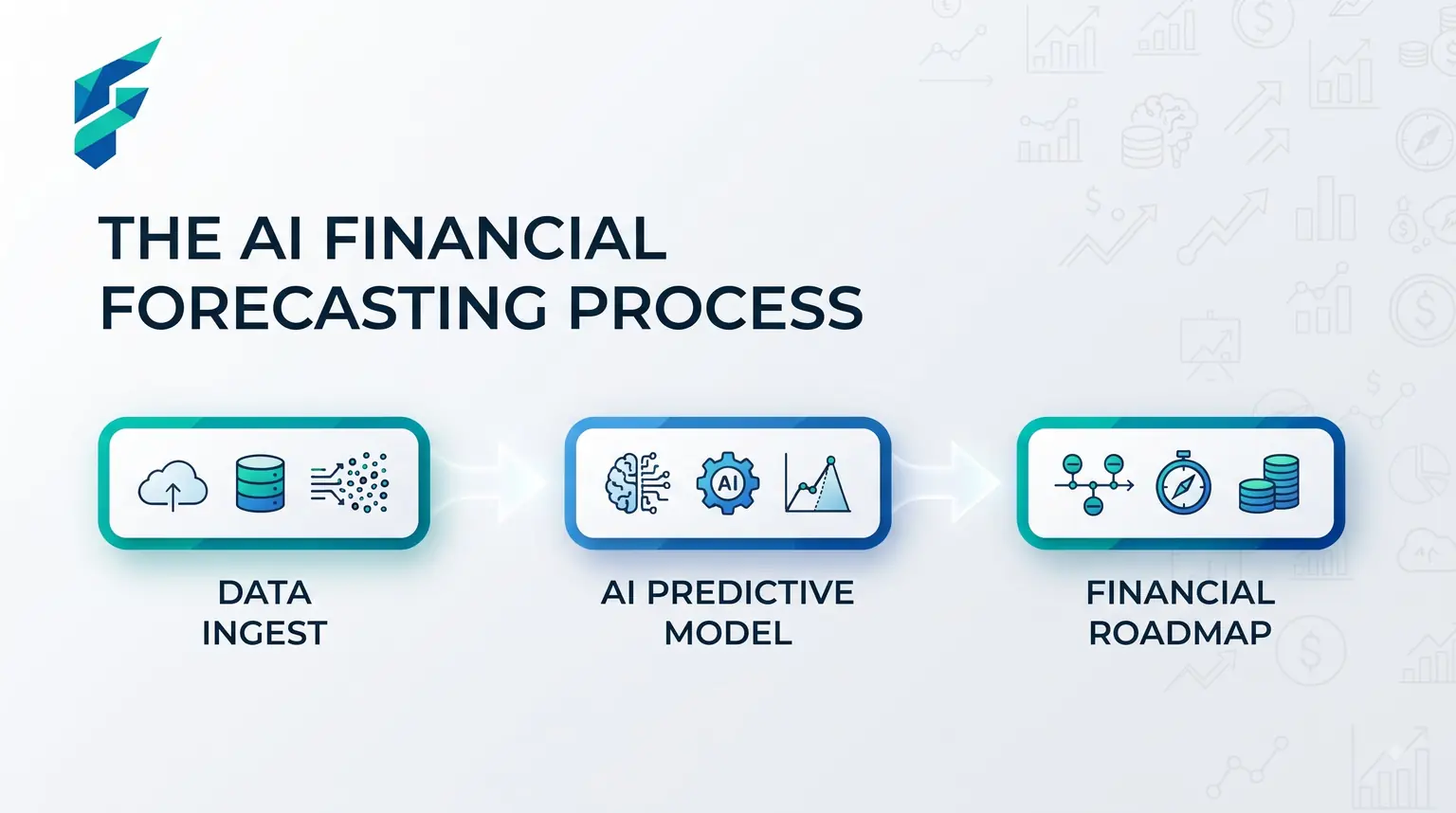
We tested this with a client last quarter. Their manual forecast predicted $180K revenue for Q3. The AI tool, analyzing 18 months of historical data plus seasonal trends, predicted $162K. Actual revenue came in at $165K — the AI was within 2%, while the manual forecast was off by 9%. That 7% difference would have led to over-hiring and cash flow problems.
💡 New to AI tools? If you're just getting started, our beginner's guide to AI tools for small business covers the basics before you dive into financial forecasting.
Where AI forecasting goes wrong
- Black swan events. AI can't predict unprecedented events — a pandemic, a major competitor suddenly closing, a supply chain collapse. It extrapolates from historical patterns, which fails when history provides no precedent.
- New products or markets. If you're launching something completely new, AI has no historical data to analyze. In these cases, AI forecasting is no better than guessing.
- Over-reliance on automation. The biggest mistake is treating AI forecasts as gospel. They're a tool to inform decisions, not replace human judgment about market conditions, competitive threats, and strategic opportunities.
A simple framework that actually works
- Start with clean historical data. AI forecasting is only as good as your data. If your books are messy or you're mixing personal and business expenses, fix that first.
- Use AI for baseline forecasts. Let the AI generate a baseline forecast based on historical patterns.
- Apply human judgment for adjustments. Layer in your knowledge of upcoming changes — new products, market shifts, planned marketing campaigns.
- Run multiple scenarios. Use the AI to model best-case, worst-case, and most-likely scenarios.
- Review and adjust monthly. Compare actual results to forecasts, identify where the AI was wrong, and adjust your assumptions.
This framework combines AI's pattern-recognition strength with human strategic thinking. The AI handles the math; you handle the context.
Related guides: Once you have your forecasts, learn how to communicate them effectively in our guide on AI tools for small business content strategy. And if you're automating other financial tasks, check out our AI summarization tools guide for processing financial documents.
Pricing: what you actually pay
Most small business AI forecasting tools fall into three tiers:
- $20-50/month: Basic forecasting for solopreneurs or very small businesses. Usually limited to revenue forecasting with simple scenario modeling.
- $50-150/month: Mid-tier for growing businesses. Includes cash flow forecasting, multiple scenario modeling, and integration with accounting software like QuickBooks or Xero.
- $150-300/month: Advanced features for established small businesses. Includes custom KPIs, team collaboration, investor reporting, and advanced scenario planning.
Wondering about the total cost of AI automation for your business? Our guide on how much AI automation costs for small business breaks down the full picture.
🚀 Ready to start? Don't overthink it. If you have at least 6 months of clean financial data, try a free trial of one forecasting tool. Input your historical data, generate a baseline forecast, and compare it to your manual forecast. The difference will tell you if it's worth the investment. Check our Tool Finder filtered for financial forecasting tools to explore options.