🤖 AI Agents · Automation · Small Business
AI Agents for Small Business
What They Actually Are (Beyond the Hype)
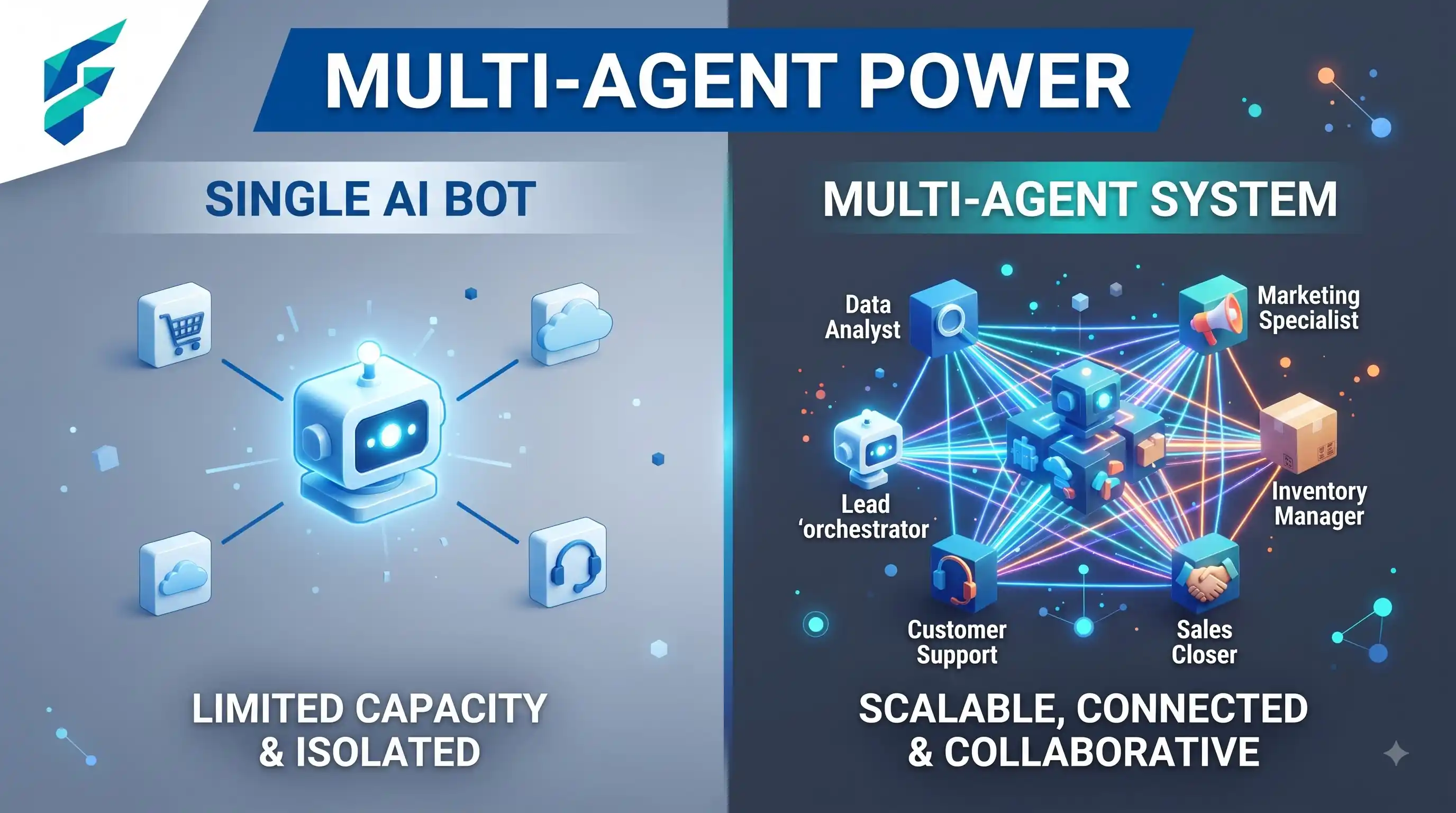
"AI agent" has become one of the most overused terms in software marketing, applied to everything from a basic AI chatbot to something that genuinely completes multi-step tasks on its own. It's worth being precise about the difference before you evaluate whether any of this applies to your business yet.
Quick answer: An AI agent, properly defined, takes a goal and completes a multi-step task toward it with minimal supervision — booking a series of appointments, researching and compiling a report, managing an email inbox end to end. Most small businesses don't need this yet; a chatbot or a simple automation handles most real needs at a fraction of the complexity and cost.
What actually makes something an "agent" versus just an AI tool
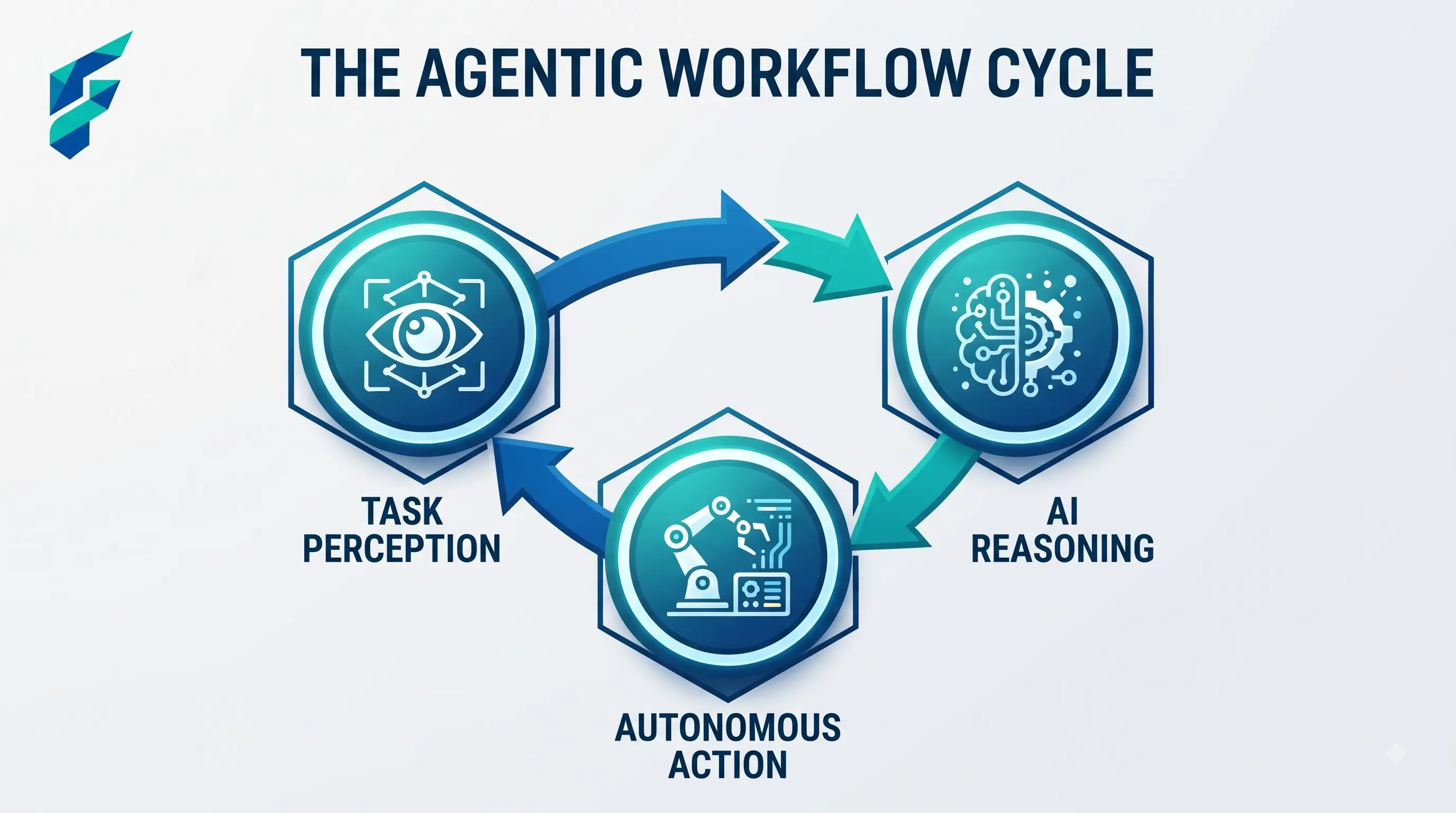
A regular AI tool responds to one prompt with one output — you ask, it answers. An agent takes a broader goal, breaks it into steps, and works through them with less involvement from you — potentially checking multiple sources, making decisions along the way, and only coming back to you with a result or a question when it's genuinely stuck.
The practical difference: a chatbot drafts one email when you ask. An agent could, in theory, manage your entire outreach campaign — finding contacts, drafting each message, sending follow-ups — with only periodic check-ins. As noted by the National Institute of Standards and Technology (NIST), the defining characteristic of an autonomous AI agent is its ability to pursue complex goals, but this autonomy introduces compounding risks that require careful human oversight.
I recently tested an agent-style tool for compiling weekly competitor newsletter summaries. It successfully pulled data from five different RSS feeds, summarized the key points, and drafted a Slack update. However, it hallucinated one pricing detail, which required me to manually verify the final output. It saved me about 45 minutes, but the verification step remains non-negotiable.
✅ Pro tip: Before exploring complex agents, make sure you have the basics covered. Our guide on the best AI tools for small business owners covers the foundational tools you should master first.
Where agents are genuinely useful right now
Research tasks with multiple steps
Compiling information from several sources into one summary — competitor research, market research — is a good fit, since the stakes of a minor error are low and you're reviewing the output anyway.
Repetitive, well-defined multi-step processes
If a task always follows the same sequence of steps and doesn't require real judgment calls, an agent can handle the whole chain more reliably than at first it might seem, precisely because there's nothing ambiguous for it to get wrong.
Where agents are still shaky, and why that matters for a small business
- Anything with real financial or legal consequences, unsupervised. Agents can make mistakes across a chain of steps that compound — an error in step two throws off everything after it, and by the time you see the final output, it's not always obvious where it went wrong.
- Tasks needing judgment calls specific to your business. An agent doesn't know your unwritten rules — the customer you always make an exception for, the vendor relationship that needs careful handling. It'll apply generic logic unless you've explicitly told it otherwise, and it can't ask about every edge case as it comes up.
I would never hand customer refund approvals or vendor contract negotiations to an unsupervised agent. These tasks require nuanced judgment, an understanding of long-term relationship dynamics, and adherence to specific company policies that an AI simply cannot infer without explicit, exhaustive rules. A single misstep here costs trust or money.
💡 A safer alternative: For most small businesses, a well-structured no-code automation (as covered in our guide on AI automation tools for small business) is a safer, more predictable alternative to a fully autonomous agent.
A realistic way to start, if you want to
Pick a low-stakes, multi-step task — research, compiling information, drafting a sequence of related content — and let an agent-style tool run it with you reviewing the final output, not each step. That's a reasonable first experiment. Anything customer-facing or financial should stay closely supervised for now.
Comparing agent tools to what most small businesses already use
| Tool type | What it does | Supervision needed | Right for most small businesses today |
|---|---|---|---|
| Basic AI chatbot | One prompt, one response | You review each output | Yes, for most tasks |
| No-code automation (Zapier/Make + AI step) | Fixed, predictable multi-step chain | Set up once, monitor occasionally | Yes, for well-defined repetitive tasks |
| AI agent tools | Flexible, multi-step, adapts as it goes | Periodic check-ins, not step-by-step | Selectively — for low-stakes, multi-step research tasks |
The honest state of things
Agent technology is moving fast, and what's shaky today may be reliable in a year. For now, the safer bet for most small businesses is a well-built automation with predictable, fixed steps rather than a more flexible agent handling something you can't easily review before it acts.
My recommendation: master basic chatbots and fixed no-code automations first. Once those are running smoothly, experiment with an agent for a low-stakes research task. When you're ready to explore options, check our Tool Finder filtered for automation and agent tools to see what fits your current workflow and risk tolerance.