✍️ AI Content · Content Marketing · Repurposing
AI Content Repurposing Tools
for Small Business (2026)
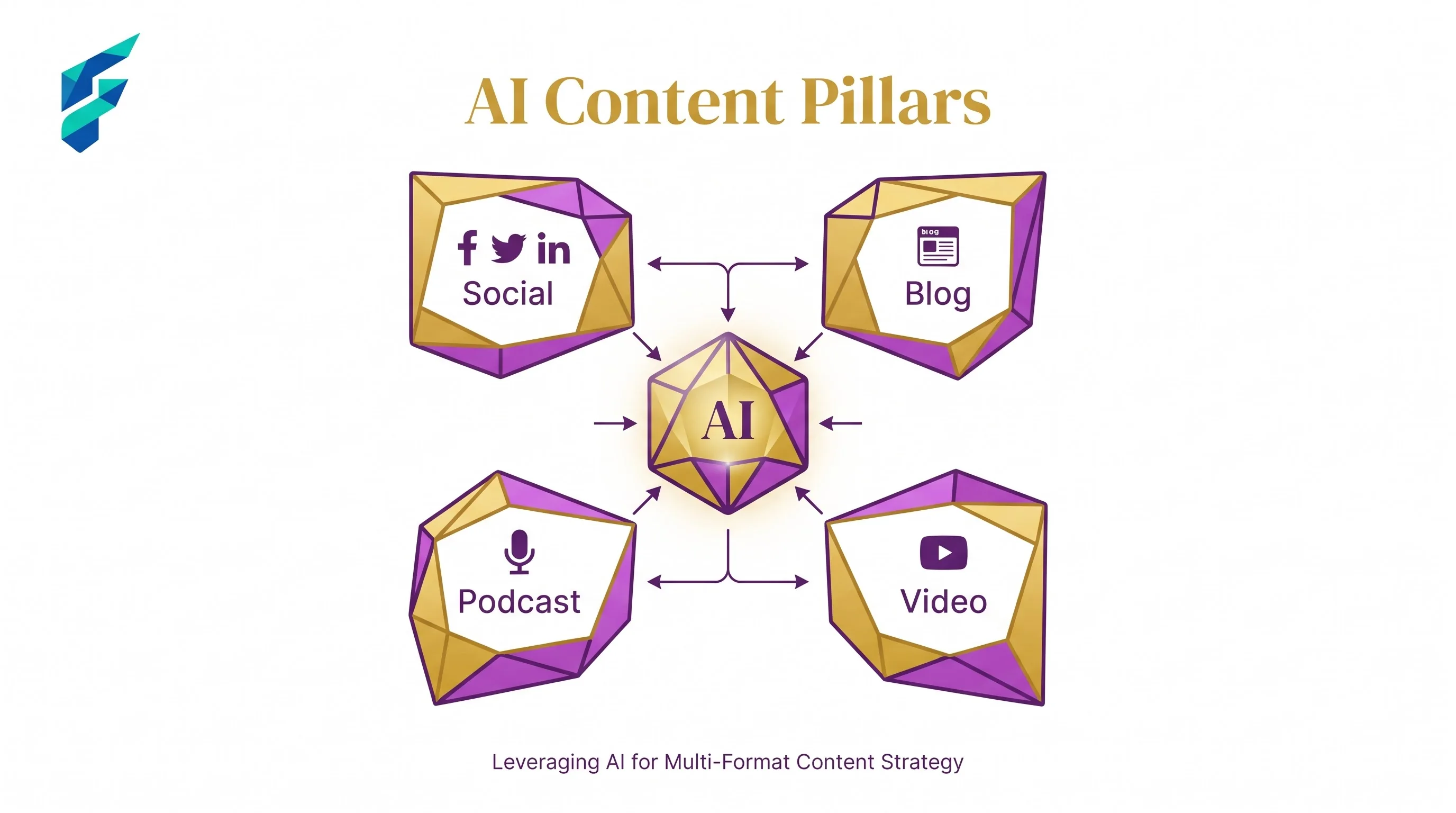
Quick answer: AI content repurposing tools take one piece of content — a blog post, a video, a call recording — and adapt it into social posts, email sections, and short clips without you rewriting from scratch every time. The tools that work well don't just reformat; they adjust tone and length per platform, so a LinkedIn post doesn't read like a shortened blog paragraph.
Most small businesses create one good piece of content and let it die on one channel. The blog post gets written, gets a handful of readers, and that's it — no social post, no email mention, no second life anywhere else. Repurposing fixes that, and AI is what makes it fast enough to actually happen every week instead of "someday."
Why one piece of content should become five
A single well-researched blog post usually contains enough material for a LinkedIn post, a short thread, an email newsletter section, and a couple of social captions — the ideas are already there, they just need reformatting per channel. Skipping this step means the research and writing time you already spent only pays off once.
This isn't just intuition. Referral Rock's survey of marketers found the large majority who repurpose content report it as one of their better-performing tactics — often outperforming content built from scratch for the same channel, because it's already been proven to resonate once.
What actually counts as repurposing (and what doesn't)
Repurposing is not the same as generating five new pieces of content about the same topic. That's just more original writing, and it carries the same time cost as starting from zero.
Real repurposing takes the same source material and adapts its format:
- A blog post → a LinkedIn post that leads with the strongest single insight, not a summary of the whole thing
- A recorded call or webinar → show notes, a blog recap, and a handful of quote-based social posts
- A long guide → an email series that sends one section per week instead of one giant post nobody finishes
The AI's job here is adaptation, not invention — matching tone, length, and structure to where the content is landing.
Where AI genuinely saves time
Three repurposing jobs are worth automating, because doing them manually is pure formatting labor with no creative upside:
Tone-shifting per platform. A blog paragraph and a LinkedIn post shouldn't read the same — LinkedIn rewards a more direct, first-person voice; a blog post can carry more explanation. Good AI writing tools that adapt tone per platform handle this shift without you manually rewriting each version.
Pulling the source strategy together first. Repurposing works best when it's planned alongside the original piece, not bolted on after. If you know a post is going to get cut into five formats, you write it slightly differently from the start — clearer standalone insights, quotable lines, a structure that splits cleanly. This is really a content-strategy decision more than a repurposing one; planning your content strategy with AI tools covers how to set that up from the outset.

Scheduling and posting the results. Repurposed pieces are only useful if they actually go out on a schedule instead of sitting in a drafts folder. AI social media tools for scheduling the repurposed pieces close that loop — turning a batch of five adapted posts into an actual week of content instead of a pile of good intentions.
The trap: repurposing into duplicate content
Here's where small businesses lose the SEO benefit of repurposing without realizing it. If your "repurposed" blog post for a second keyword is really the same article with the H1 swapped, that's not repurposing — it's thin, duplicate content, and it can actively hurt both pages instead of helping either one.
Google's own guidance on this is worth internalizing here: content should exist because it genuinely serves a reader's need on that specific channel or angle, not because it was fast to produce. See Google's guidance on creating helpful, people-first content — the same source material can support multiple genuinely different pieces, but only if each one earns its place with a real angle, not a swapped headline.
A realistic weekly workflow
- Write one solid, well-researched piece — this is the only step that isn't automatable, and it's worth the time
- Pull 3–5 standalone insights or quotable lines out of it
- Adapt each into the format for its channel — social post, email section, short clip script
- Schedule the batch instead of posting one at a time as you remember
- Track which repurposed format actually drove clicks back to the source, and lean into that format next time