📧 Sales · AI Writing · Small Business
AI Tool to Write Cold Emails for Small Business
(Bad vs Good Example)
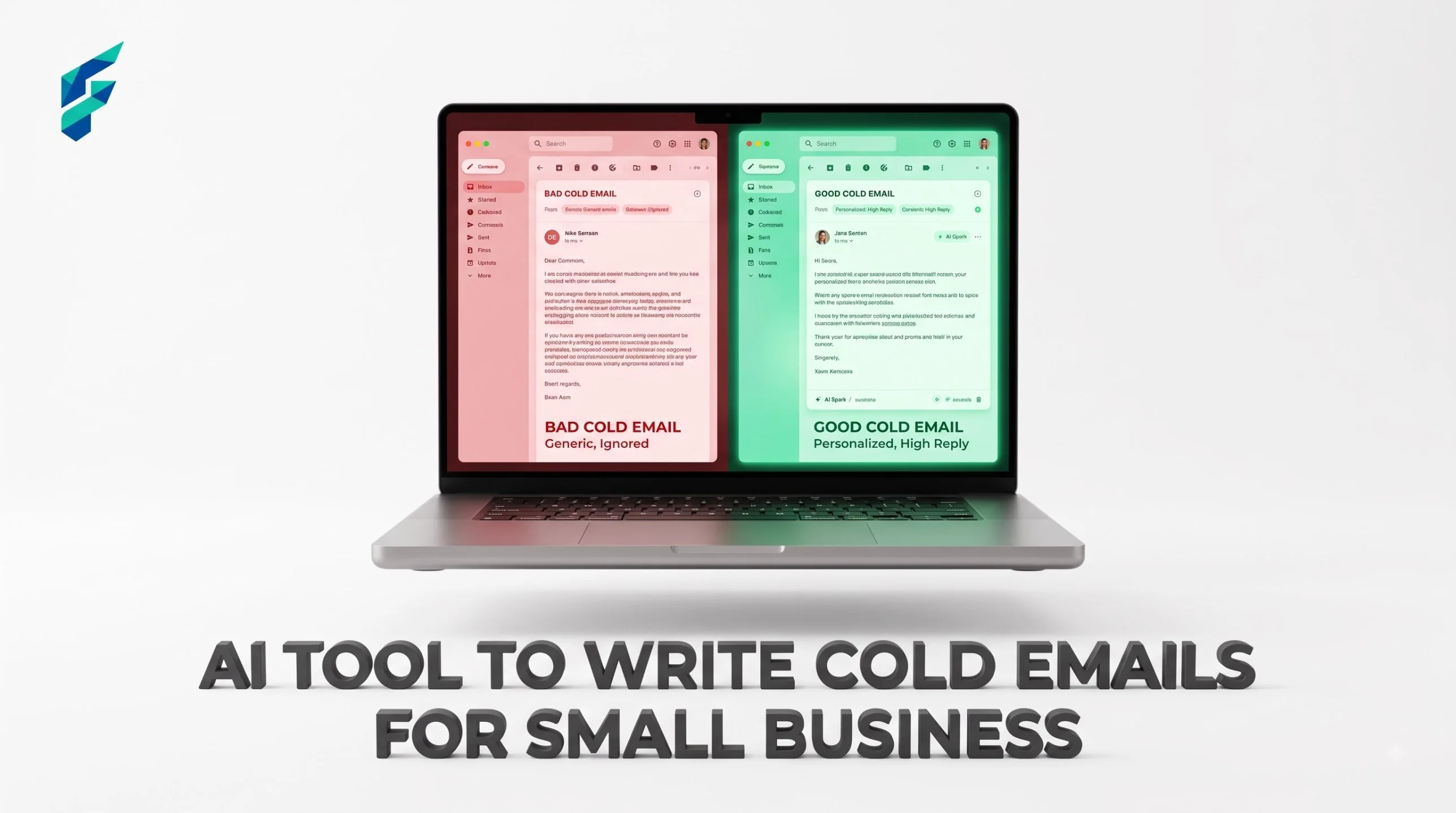
Here is a cold email AI will write if you ask it badly:
Subject: Boost Your Business With Our Amazing Services!
Dear Sir/Madam, I hope this email finds you well. We are a leading provider of innovative solutions...
Nobody finishes reading that. Now the same offer, rewritten with three real facts:
Subject: Your Diwali menu photos
Hi Priya, I saw your café's Instagram has great food but the photos are dark. I take product photos for cafés in Pune. Here are 3 I did for another café nearby: [link]. Want me to shoot 5 of your dishes for free so you can see the difference?
The difference is not clever AI. It is that the second email names a person, a real observation and one small ask. AI is good at the writing part. You must bring the facts.
The 5-line shape that works
| Line | What it says | Example |
|---|---|---|
| 1 | Why you are writing to them | "I saw your café's photos are dark" |
| 2 | Who you are, in one sentence | "I shoot food photos in Pune" |
| 3 | Proof | A link or one result |
| 4 | One small ask | "Can I send 5 free shots?" |
| 5 | Easy exit | "If not now, no problem." |
Keep the whole email under 100 words.
Step 1: Collect 3 facts per person (5 minutes each)
Before you open AI, write down for each person: their name, one specific thing you noticed about their business, and one reason your offer fits. Without these, the AI fills the gap with flattery.
Step 2: Prompt (copy and paste)
Write a cold email, under 100 words.
To: [name], who runs [business] in [place].
What I noticed about them: [specific observation].
What I offer: [one sentence].
My proof: [one real example or link].
Ask: [one small, easy next step].
Rules: no "I hope this email finds you well", no "leading provider", no exclamation marks.
Start with the observation. End with an easy way to say no.
Give me 3 subject lines under 6 words, plain, no capital letters in every word.
Do not invent anything I did not tell you.
Step 3: Make it sound like a person
Read it out loud. Cut any sentence you would not say to the person's face. Replace one general word with one number or place name. Send it from your own name and email, not a template-looking address.
Step 4: Follow up once
Most replies come after the second message. Ask AI for a follow-up that adds one new piece of value (a tip, a photo, a result) instead of "just checking in":
Write a 40-word follow-up to my first email below. Add one new useful thing,
not a reminder. Make it easy to say no.
First email: [paste]
The rules you must follow: Cold email to businesses is still regulated. In the US, the FTC's CAN-SPAM guide says commercial email needs accurate sender details, an honest subject line, a clear sign that it is an ad, a valid postal address, and a working way to opt out that you honour within 10 business days. Rules in other countries can be stricter, so check yours.
When to use tools instead of a chatbot
If you send to hundreds of people, writing one by one gets slow. That is when personalization tools help. Our page on AI tools for cold email personalization compares them. To find people worth writing to, see AI lead generation tools for small business. And once replies come in, AI email management tools for small business help you keep up.
Mistakes to avoid
- Trusting numbers and names without checking.
- Recording without telling people (if using AI meeting tools alongside).
- Sending a raw transcript instead of short notes.
- Using five tools when one is enough.
Real-world example: My best-performing cold email line was: "I noticed your checkout page takes 4 clicks, but your competitors do it in 2." I sent this to 20 local e-commerce store owners. I got 3 replies and booked 2 paid consulting calls. The specific, undeniable observation is what made them reply, not the AI's vocabulary.
External resources
- CAN-SPAM Act: A Compliance Guide for Business — official FTC guide on the legal basics for sending business email.