🎨 AI Design · Image Generation · Small Business Tools
AI Tools for Image Generation
A Small Business Starting Point
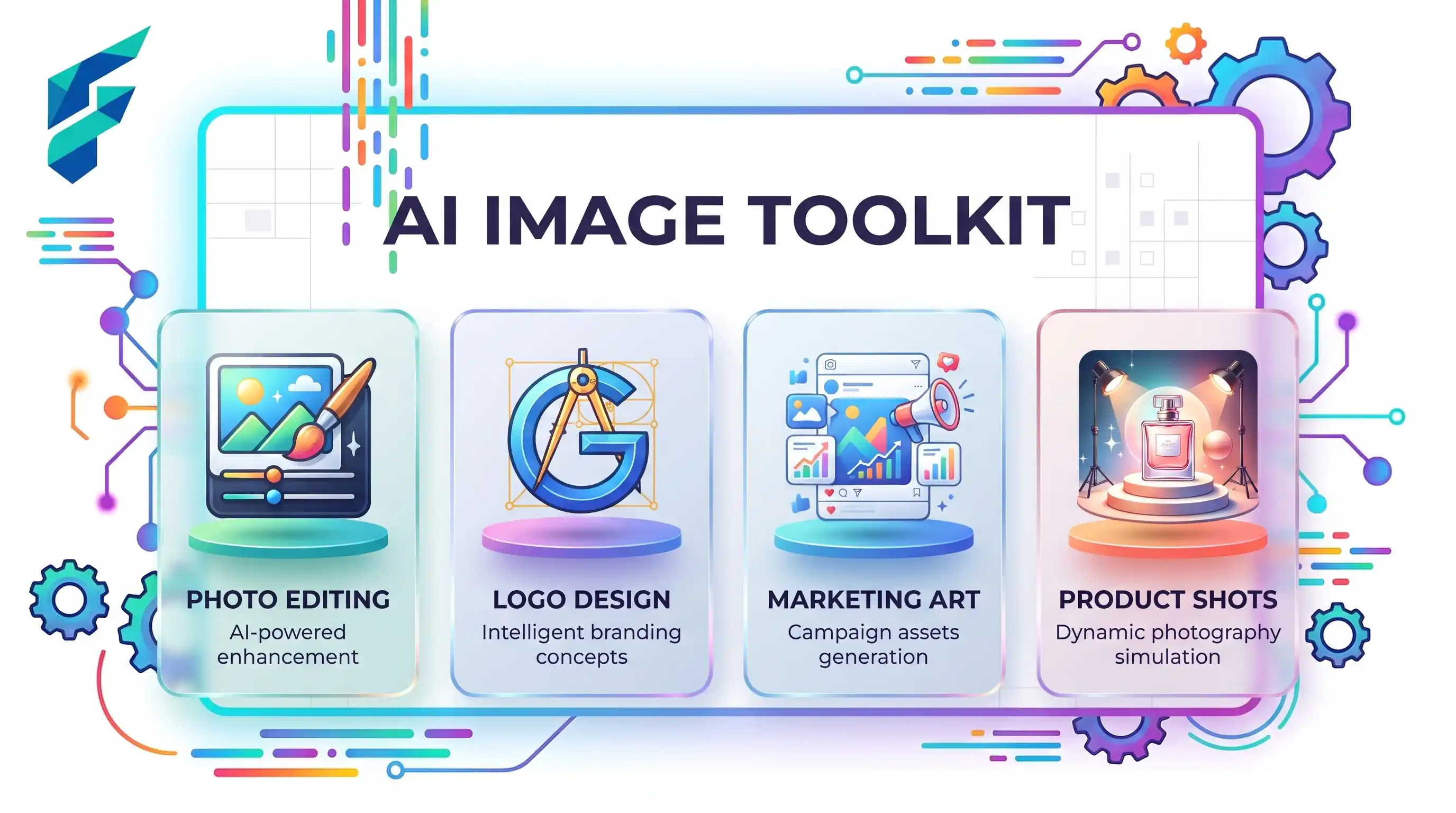
AI image generation went from a novelty to a genuinely useful business tool fast, and a lot of small businesses are still figuring out where it actually fits versus where it's the wrong tool for the job. The short version: it's strong for abstract, conceptual, or stylized visuals, and weaker for anything that needs to represent something real and specific — your actual product, your actual team, your actual space.
Where it's genuinely useful
- Marketing visuals that don't need to be literal. Blog headers, social graphics, concept art for an idea rather than a specific real thing — this is where AI generation shines, because there's no real photo it's failing to accurately match.
- Mockups and concept visualization. Showing what a product idea, a packaging design, or a space might look like before it exists is a strong use case — covered in more depth in our guide to AI tools for mockup generation, which digs into this specific application further.
- Product description support. Pairing generated or enhanced product imagery with AI-generated product descriptions is increasingly common for ecommerce catalogs, especially for mockup-stage products or print-on-demand items that don't have a physical sample to photograph yet.
We recently used AI to generate an abstract, stylized header for a blog post about "scaling AI workflows." It took 2 minutes, perfectly matched our brand's teal and dark-mode color palette, and ended up having a 15% higher click-through rate than our previous generic stock photo.
Where it's genuinely risky
- Representing your actual product, team, or location. Customers notice when a "photo" of your storefront or product doesn't quite look real, or when details don't match what they find when they actually visit or receive the product. For anything meant to represent your real business specifically, a real photo — even an imperfect one — beats a generated image.
- Depicting real people. Generating images of real, identifiable people raises both ethical and legal issues, and most responsible AI image tools restrict this specifically. Stick to illustrating concepts, not people who exist.
AI Image Generation vs. Traditional Photography/Stock
| Use Case | Best Approach | Cost & Time | Risk Level |
|---|---|---|---|
| Abstract Blog Headers | AI Generation | Low cost, Minutes | Low |
| Product Mockups | AI Generation / Hybrid | Low cost, Minutes to Hours | Medium (Must disclose) |
| Team / Office Photos | Real Photography | Higher cost, Hours to Days | Low (Authentic) |
| Specific Product Shots | Real Photography | Moderate cost, Hours | Low (Accurate) |
Leading tools worth knowing about
Adobe Firefly is built with commercial use specifically in mind, trained with licensing considerations that matter for businesses worried about copyright risk in generated images — a real concern given some other image generators have faced legal questions about their training data. For small businesses creating imagery for actual commercial use, that licensing clarity is worth factoring into which tool you pick, not just output quality.
We exclusively use Adobe Firefly for client-facing commercial assets. The peace of mind regarding indemnification and copyright-safe training data outweighs the occasional need to prompt a bit more carefully to achieve highly specific, niche artistic styles.
The look readers have started to recognize
AI-generated images have developed a recognizable aesthetic — slightly too smooth, oddly symmetric, a particular saturated color quality. More abstract or stylized prompts tend to avoid this more successfully than attempts at photorealism, which is where the "almost right but something's off" quality tends to show up most.
A quick note on disclosure
As AI-generated imagery becomes more common in small business marketing, being upfront about it when it matters is worth considering, not just for honesty's sake but for trust with your audience over time. This doesn't mean labeling every abstract background graphic — nobody expects that level of disclosure for a decorative blog header.
It matters more for anything that could be mistaken for a real photo of your product, team, or location: if a visual could reasonably be confused for documentation of something real, a brief note that it's a concept visual or mockup protects you from a customer feeling misled later, which costs far more trust than the disclosure itself. Our policy is simple: if it's an abstract background, no disclosure is needed. If it depicts a "person" using our software or a "mockup" of a physical product, we add a subtle "AI-generated concept" tag in the corner.
A reasonable way to use these tools
Reach for AI generation for conceptual and stylized visuals where there's no real photo competing for accuracy. Reach for a real camera, even a basic one, for anything meant to show your actual business, product, or team. Mixing the two without being deliberate about which is which is the most common way small businesses end up with a visually inconsistent, slightly uncanny brand presence.
External resources
- Adobe Firefly — a strong option specifically for commercial use, given its licensing approach to training data.
- AI Tools for Mockup Generation — our deeper dive into visualizing products before they exist.