🧪 Google Easter Eggs · Retro Google
Google Backrub 1996
Original
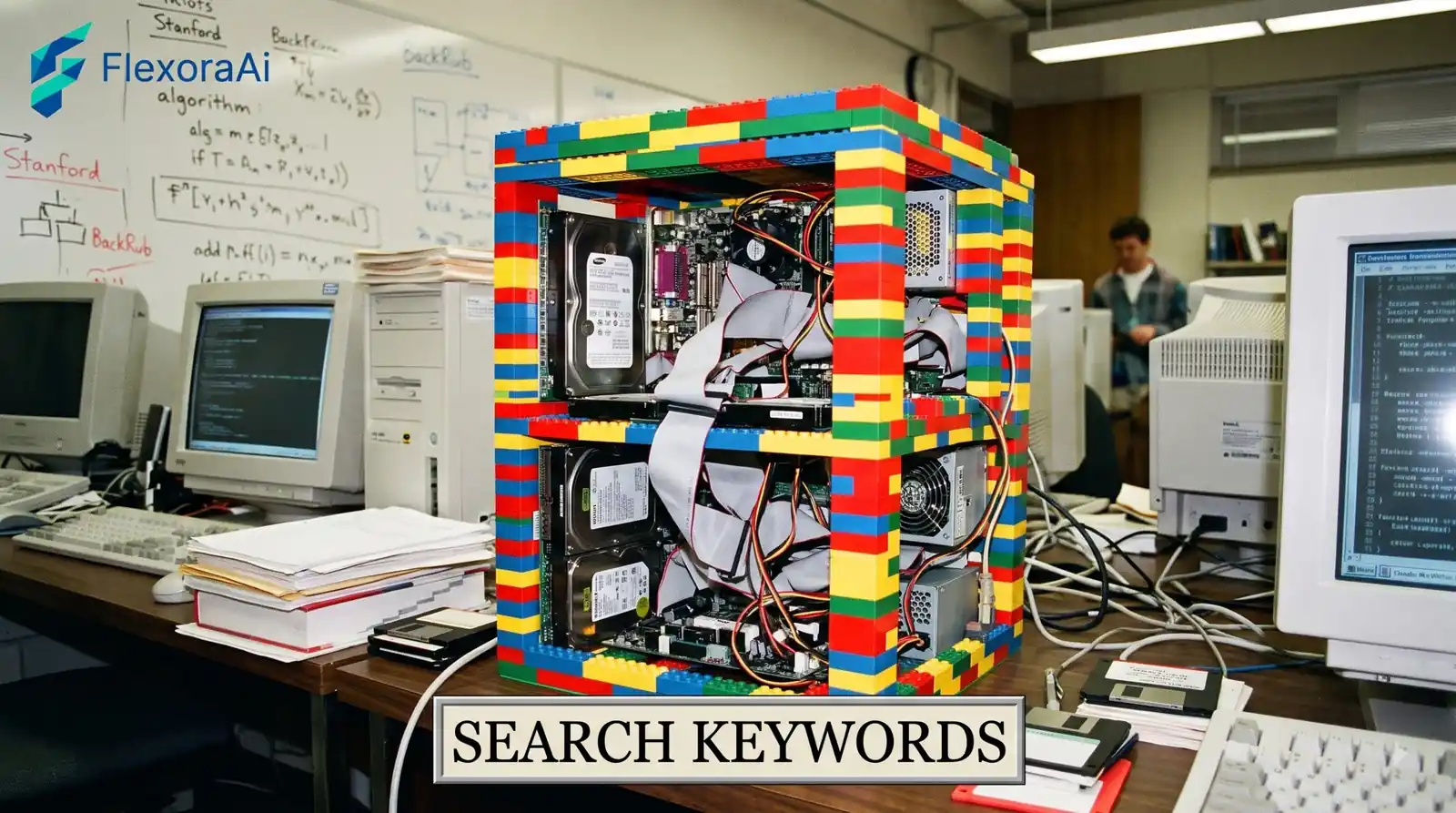
Imagine telling someone in 1996 that the future of search would be called BackRub. They'd laugh. Yet the idea behind that silly name is the reason Google works at all. This is the story of the original project, how it got its name and how a typo gave us the word we use today. It's where our retro Google tricks guide begins.
Short answer: BackRub was the 1996 Stanford research project by Larry Page and Sergey Brin that became Google. It was named for its analysis of back links, and it was renamed Google in 1997.
Worth knowing
- BackRub began in 1996 as a Stanford research project.
- It ranked pages by the links pointing to them.
- It was renamed Google in 1997, and google.com was registered on September 15, 1997.
What BackRub did
Page, working on his PhD, wondered whether the links between web pages could tell you which pages mattered. His crawler began exploring the web in March 1996, starting from his own Stanford home page. Brin soon joined him. They used the backlink data to judge a page's importance, an approach that grew into the PageRank algorithm.
The name came straight from the method. It looked at the links pointing back to a page, so BackRub made sense to the people building it, even if it sounds odd to everyone else.
From dorm room to domain
| Year | Step |
|---|---|
| 1996 | BackRub crawls the web from Stanford. |
| 1996 to 1997 | It runs on Stanford's network at google.stanford.edu. |
| 1997 | The name changes to Google. |
| Sept 15, 1997 | google.com is registered. |
| Sept 4, 1998 | Google is founded as a company. |
The project grew until it processed around 10,000 queries a day on Stanford's network. That was a lot for a university's bandwidth, and it was one reason the pair moved to a dedicated domain and a company of their own.
Why the name changed
"Google" came from "googol," the number one followed by a hundred zeros. The founders liked the idea of a name that suggested an enormous amount of information. The extra o is usually traced to a spelling mistake made while checking if googol.com was free. Whatever the exact moment, the misspelling stuck, and the domain was registered within hours.
It's one of the great accidental brand stories, and it deserves a place beside the playful items in our complete list of Google Easter eggs.
What BackRub means today
- The idea survived. Links as a signal of importance still shape search.
- The name didn't. It is now a trivia answer.
- The birthday moved. Google celebrates on September 27 rather than its founding date, a tradition since 2005.
How to explore it
- Read Stanford's account of the name origin for the primary version.
- Browse the Internet Archive for early Google pages.
- Compare what you find with the official Google in 1998 trick.
- Treat any claim about a "BackRub" page online with care unless it links a source.
Curious about more search history? Our Google search tricks list covers the tricks that came after.
The people and the machines
Page and Brin weren't alone. In a note from the period, Page thanks Scott Hassan and Alan Steremberg for a great deal of implementation help, and describes Brin as closely involved in the project.
The hardware was modest. The pair assembled BackRub from leased servers and discounted parts, and they built what they called a data center in Page's Stanford dorm room, running under the address google.stanford.edu.
How links became votes
The core idea came from academic publishing. A paper cited by many others is probably important, and a citation from an important paper counts for more. BackRub applied that logic to hyperlinks.
The ranking method became PageRank, which is named after Larry Page, not after web pages. That small detail is a favorite among search historians, and it's a good bar-trivia answer.
Why Stanford's bandwidth mattered
The first version of the search engine went up on Stanford's website in August 1996. As the crawler grew, it ate into the university's bandwidth. That pressure pushed the pair toward a dedicated domain, and with it a new name.
What builders can take from it
- Start from your own itch. Page began with a research question, not a product plan.
- Constraints help. Leased servers and a borrowed network forced the system to be efficient.
- Name it later. The name that stuck came after the idea had already proved itself.
How we checked this: We used Stanford's account of the name origin, Wikipedia's history of Google and Search Engine Land's guide to Google. Where sources disagree on small details, such as the exact month BackRub first went public, we kept only what they share. If something here is out of date for you, email ownerflexora.ai@gmail.com and we will fix it.
Your turn: Ask three people what Google was called before it was Google. See how many guess BackRub, then tell them why.
The most striking thing about BackRub is how small it was: two students, a borrowed network and an odd name. The idea that links carry meaning has outlived the name and the machines. If you do one thing after reading this, open the Stanford page linked below. It's short, and it's the closest thing to a primary source we have.
Where to go next
Seen claims about an even older Google? Our guide to the Google in 1985 Easter egg explained is next.
Frequently Asked Questions
For the primary account, read Stanford's account of the name origin.