🌍 AI Translation · Business Communication · Document Localization
AI Tools for Translating Documents
How Reliable Are They Really?
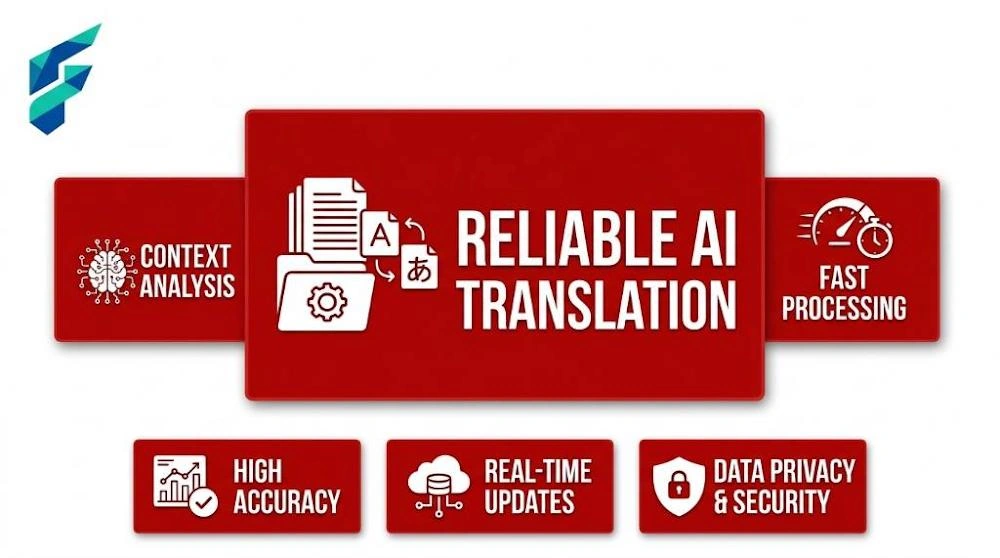
AI translation has gotten good enough that most small businesses can handle routine translation needs without hiring a professional every time. "Good enough" is doing real work in that sentence, though — the reliability varies a lot depending on what you're translating and what happens if a mistake slips through.
Where AI translation is genuinely reliable
- Straightforward business communication. Emails, general correspondence, internal documents without heavy technical or legal language — modern AI translation tools handle these well, and the error rate is low enough that a quick human read-through catches anything that slipped through.
- Common language pairs. Translation quality is noticeably better between widely-spoken language pairs (English to Spanish, English to French, and similar) than between less common pairings, simply because there's more training data for the tool to draw from. If you're translating into a less common language, expect to need more careful human review.
For our own operations, we frequently translate internal documentation and standard operating procedures between English and Spanish. The AI results for this specific pair are consistently excellent, requiring only a quick 2-minute skim by a bilingual team member to catch any minor phrasing quirks.
Where it gets genuinely risky
- Legal and contractual documents. A mistranslated clause in a contract isn't a minor error — it can change what you're actually agreeing to. Anything with real legal weight should go through a professional human translator, or at minimum get a professional review pass after an AI first draft, not be trusted to AI output alone.
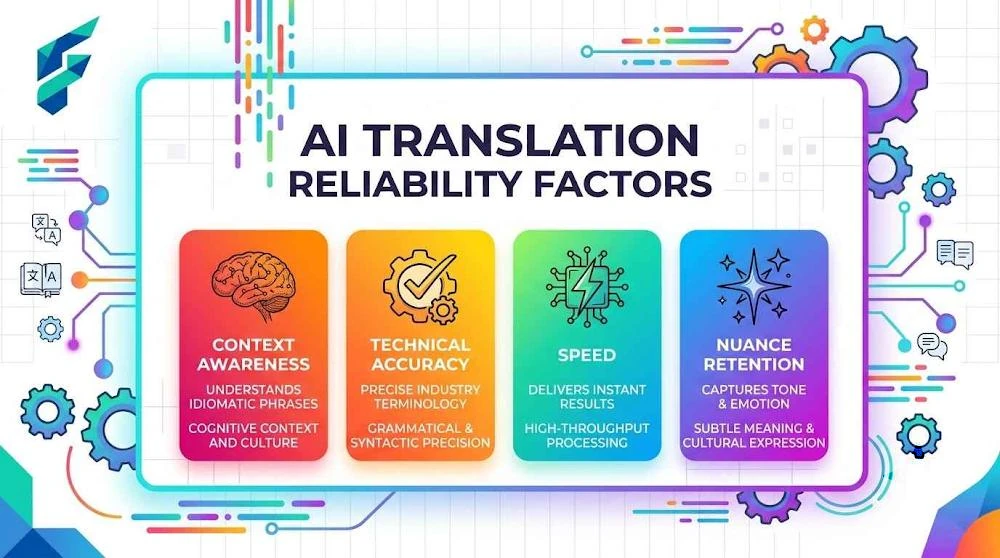
- Technical and industry-specific documents. Specialized terminology — medical, legal, engineering — is where AI translation is most likely to produce a translation that reads fluently but gets a specific term subtly wrong. The fluency is actually part of the risk: a bad translation that reads awkwardly gets caught. A fluent one that's subtly wrong can slip through unnoticed.
- Anything culturally sensitive. Idioms, humor, and culturally specific references translate poorly by nature — AI tools included — because they often don't have a direct equivalent in the target language. A literal translation can come across as confusing or unintentionally strange to a native reader.
I once reviewed an AI-translated vendor agreement where the tool translated a standard "force majeure" clause using a localized idiom that accidentally implied we were assuming liability for natural disasters, rather than exempting us. A fluent but legally catastrophic error that a professional reviewer caught immediately.
A sensible way to use AI translation for a small business
Use it as a fast first draft for anything low-stakes — routine correspondence, internal notes, first-pass drafts of longer documents. For anything with real financial, legal, or reputational consequences, treat the AI translation as a starting point for a professional review, not a finished product. The cost of a professional review pass is small compared to the cost of a contract or a formal document going out with an error in it.
This connects to a related caution worth reading if you're drafting formal documents that might also need translation — our piece on AI tools for writing business proposals covers similar stakes on the drafting side before translation even enters the picture.
Real-time translation versus document translation
Translating a static document and translating a live conversation are different problems with different tools built for each. If you need translation during a live call or meeting rather than for a written document, our guide to AI tools for real-time translation covers that specific use case, which has its own reliability considerations separate from document translation.
Comparing your options at a glance
For a deeper dive into specific translation tools and how they compare to each other, our full breakdown of the best AI translation tools covers that in more detail than fits here.
My personal rule is simple: if the document involves money, legal liability, or public-facing brand messaging, it gets a human review. For internal Slack threads, quick email replies, or drafting a first pass of a manual, AI handles 95% of the heavy lifting, saving us hours every week.
External resources
- DeepL — widely regarded as one of the stronger AI translation tools for document-length text, particularly for European language pairs.
- Google Translate — a solid free option for quick, low-stakes translation needs.