📄 AI Proposals · Sales Automation · Small Business
AI Tools for Writing Business Proposals
(What Actually Wins Deals)
Business proposals are the lifeblood of B2B sales, but writing them is notoriously tedious. AI promises to speed up this process, but the reality is far more nuanced than "type a prompt, get a winning proposal." The most effective small business teams use AI to handle the tedious 80% of the formatting and drafting process, freeing up the human to focus on the critical 20%: customizing the core value proposition and strategy.
Quick answer: AI proposal tools (like PandaDoc AI or Loopio) excel at pulling from past winning proposals, maintaining brand consistency, and generating first drafts. However, they cannot replace human strategic thinking. AI should act as a highly efficient junior sales engineer, not an autopilot.
Where AI Actually Saves Time in Proposals
RFP Response Generation
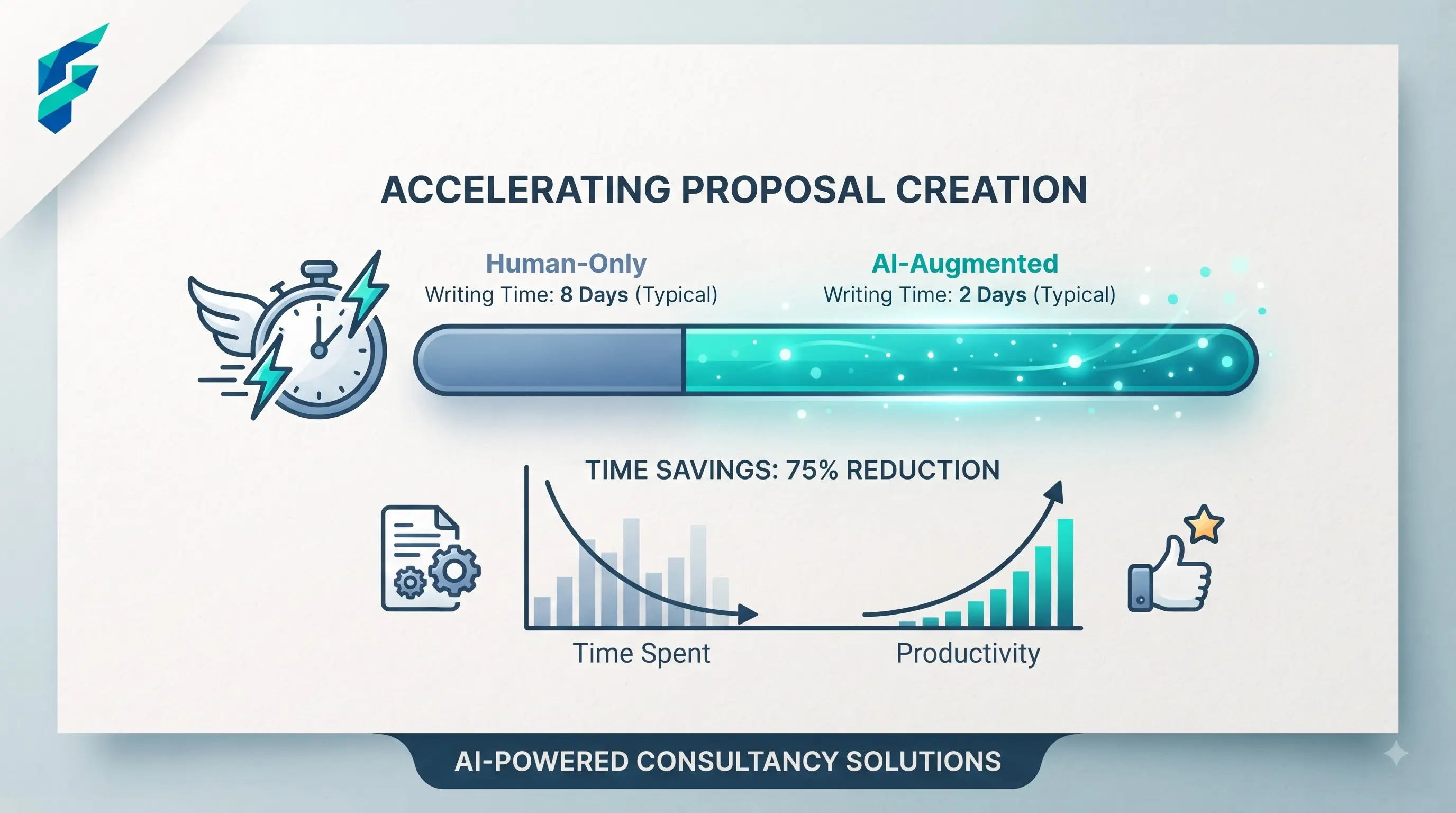
Responding to Requests for Proposals (RFPs) often involves answering the same security, compliance, and capability questions repeatedly. AI tools with a centralized content library can instantly draft accurate responses based on your pre-approved answers, cutting response time from days to hours.
Dynamic Formatting and Branding
Nothing kills a proposal's credibility faster than inconsistent fonts, broken logos, or mismatched colors. AI-powered proposal software automatically formats the document to match your brand guidelines, ensuring a polished, professional appearance every time.
Pricing Table Generation
AI can quickly build scoped pricing tables based on input variables (e.g., number of users, selected modules, contract length), reducing the risk of manual calculation errors and speeding up the quote generation process.
✅ Pro tip: Great proposals start with great discovery. After winning the initial meeting, use AI meeting transcription tools to capture requirements and pain points accurately before you even begin drafting the proposal.
The Hidden Risks (The "Hallucination" Problem)
The biggest risk of AI in proposal writing isn't that it writes poorly; it's that it writes plausibly but incorrectly. If a human sales rep makes a mistake, it's a human error. If an AI hallucinates a capability or pricing detail and it gets sent to a client, the reputational damage is severe and often irreversible.
- Hallucinated Capabilities: Generative AI might confidently promise a feature or integration your product doesn't actually have, based on pattern-matching from generic SaaS proposals.
- Outdated Pricing: If the AI pulls from an outdated knowledge base, it might quote last year's pricing, leading to awkward negotiations or lost margins.
- Data Privacy Leaks: Pasting confidential client RFPs or proprietary pricing methodologies into public, free-tier AI models is a massive security and compliance risk (GDPR, CCPA).
I once reviewed an AI-drafted proposal where the AI had confidently included a "SOC 2 Type II compliance" section for a prospect. The catch? Our company was only SOC 2 Type I compliant at the time. The AI had hallucinated the higher certification because it's a common phrase in B2B proposals. We caught it during human review, but it was a stark reminder: AI is a drafting tool, not a compliance officer.
⚠️ Security Mandate: Never use free, public AI chatbots to process confidential RFPs or proprietary pricing. According to enterprise security best practices, you must use dedicated proposal software that guarantees your proprietary data is isolated and not used to train public AI models.
Comparing the Top Contenders
| Tool | Best For | Typical Cost | AI Capability |
|---|---|---|---|
| PandaDoc AI | General B2B proposals, e-signatures, and CRM integration | $49-89/user/mo | Moderate (Drafting, summarization, smart fields) |
| Loopio | Complex RFP responses and robust content library management | Custom Enterprise Pricing | High (Auto-fills RFPs from vetted knowledge base) |
| Proposify | Design-heavy proposals requiring strict brand control | $49-99/user/mo | Moderate (AI text generation and design suggestions) |
The Honest Starting Point for Small Teams
Don't try to automate your entire proposal process overnight. Start by building a single, well-vetted "master template" for your most common offering. Use AI to fill the variables and draft the standard sections, but mandate a final human review to ensure every claimed capability and pricing detail is 100% accurate.
Just as we emphasized in our guide on AI product description generators, the key to effective AI writing is providing strict guardrails and pre-approved source material, not relying on the AI to invent your value proposition from scratch.
Integrating proposal generation into your broader workflow is just one piece of leveraging AI productivity tools for small business effectively. Think of AI proposal software not as an autopilot, but as a highly efficient junior assistant, similar to how we evaluate AI personal assistant tools for small business: powerful, but requiring strict human oversight.