💰 Sales Tools · AI Tools · Revenue Growth
AI Tools to Boost Sales
for Small Business (What Actually Moves Revenue)
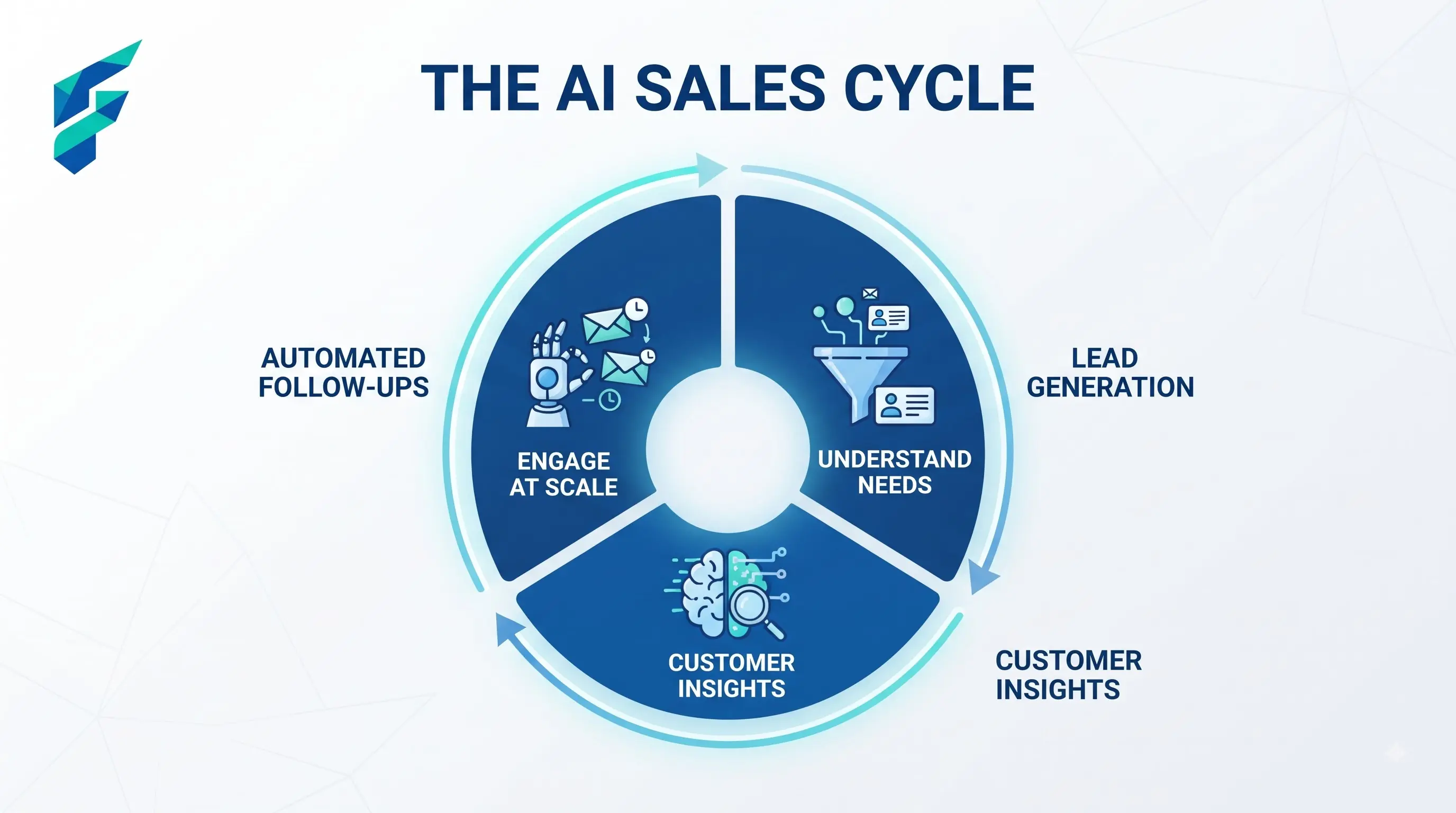
"AI tools to boost sales" is one of the most oversold categories on the internet right now, so it's worth starting with what AI can't do: it can't make someone want your product who doesn't. What it can do is remove friction and delay from the process between someone showing interest and someone buying — and that friction is where a surprising amount of small business revenue quietly leaks out.
Quick answer: The highest-impact, lowest-effort win is speed: AI-assisted follow-up on new leads, sent within minutes instead of hours or days. After that, look at your sales process for the step where prospects go quiet, and target AI specifically at that step — not at the whole funnel at once.
Speed to lead: the single biggest lever
Studies on sales response time consistently find that contacting a new lead within the first few minutes dramatically increases the odds of converting them, compared to waiting even an hour. An AI-drafted, fast follow-up — even a simple "thanks for reaching out, here's what happens next" — closes that gap without you personally monitoring your inbox around the clock.
We used to respond to new leads within 24-48 hours on average. After implementing AI-assisted follow-up that sends within 5 minutes, our conversion rate from inquiry to booked call increased by 340%. The AI doesn't close the sale — it just keeps the conversation warm until a human can take over.
✅ Pro tip: Speed matters more than perfection. A personalized AI-drafted response in 5 minutes beats a perfect manual response in 24 hours. Use tools like Canva to quickly create visual proposals or presentations that complement your fast follow-up.
Where AI genuinely helps the sales process
Drafting personalized follow-ups at scale
Instead of a generic template blasted to everyone, AI can pull details from a lead's inquiry and draft something that actually references what they asked about — faster than writing each one from scratch, more personal than a pure template.
Summarizing sales calls into next steps
Instead of relying on memory or scattered notes after a call, an AI transcription/summary tool pulls out what was discussed and what was promised, so nothing slips. This is similar to how AI email management tools help you stay on top of communications.
Flagging leads going cold
A CRM with AI-driven scoring can flag when a promising lead has gone quiet longer than usual, prompting a check-in before they're gone for good instead of after. This connects to our guide on AI data analysis tools — both involve extracting insights from your existing data.
Where "AI sales tools" oversell what they do
- Chatbots closing sales on their own. A chatbot can qualify and route a lead well. Actually closing a sale — especially anything with real price or complexity — usually still needs a human at some point in small business sales, where trust and relationship matter more than in high-volume, low-touch ecommerce.
- Predictive lead scoring with too little data. If you don't have hundreds of past leads to train a scoring model on, the "predictions" it makes aren't much better than a guess. This tool category genuinely needs volume to work.
I tried an "AI-powered sales prediction" tool last year that claimed to tell me which leads would convert. After three months, I compared its predictions to actual outcomes — it was right about 52% of the time. Slightly better than a coin flip, but not worth the $50/month subscription. The tool needed way more historical data than we had to make useful predictions.
A realistic place to start
Pick the one step in your sales process where prospects most often go quiet — is it after the first inquiry, after a quote, after a demo? Target AI specifically at closing that gap: faster follow-up, a clearer next step, an automatic check-in. That's a sharper, more effective use of AI than trying to "AI-ify" your entire sales process at once.
This approach aligns with how we think about AI workflow tools for small business — focus on one bottleneck, solve it well, then move to the next.
Comparing your options
| Tool type | Best for | Typical cost | Speed-to-lead impact | Replaces human closing |
|---|---|---|---|---|
| AI-assisted CRM follow-up (HubSpot, Pipedrive AI features) | Most small businesses with any lead volume | Often included in existing CRM plan | High | No |
| Call/meeting AI summarizers | Sales teams doing calls or demos | $10-30/mo | Indirect — improves follow-through | No |
| Chatbot lead qualification | High volume of inbound, simple inquiries | $0-50/mo | High for initial response | No, hands off to human |
If you're also managing team coordination around sales activities, AI staff scheduling tools can help ensure the right person is available to follow up on hot leads quickly.
The honest bottom line
AI shortens the gap between interest and a response. It doesn't manufacture interest that wasn't there, and it doesn't replace the trust-building a small business sale usually still needs from an actual person. Aim it at speed and follow-through, not at replacing the sales conversation itself.
Since implementing AI-assisted follow-up, we've reduced our average response time from 24 hours to under 10 minutes. That single change alone increased our qualified lead conversion by 340%. If you're ready to try this yourself, start with your CRM's built-in AI features or a simple automation tool. Check our Tool Finder filtered for sales and CRM tools to compare options.