🥁 Google Easter Eggs · Translate
Google Translate
Beatbox Trick
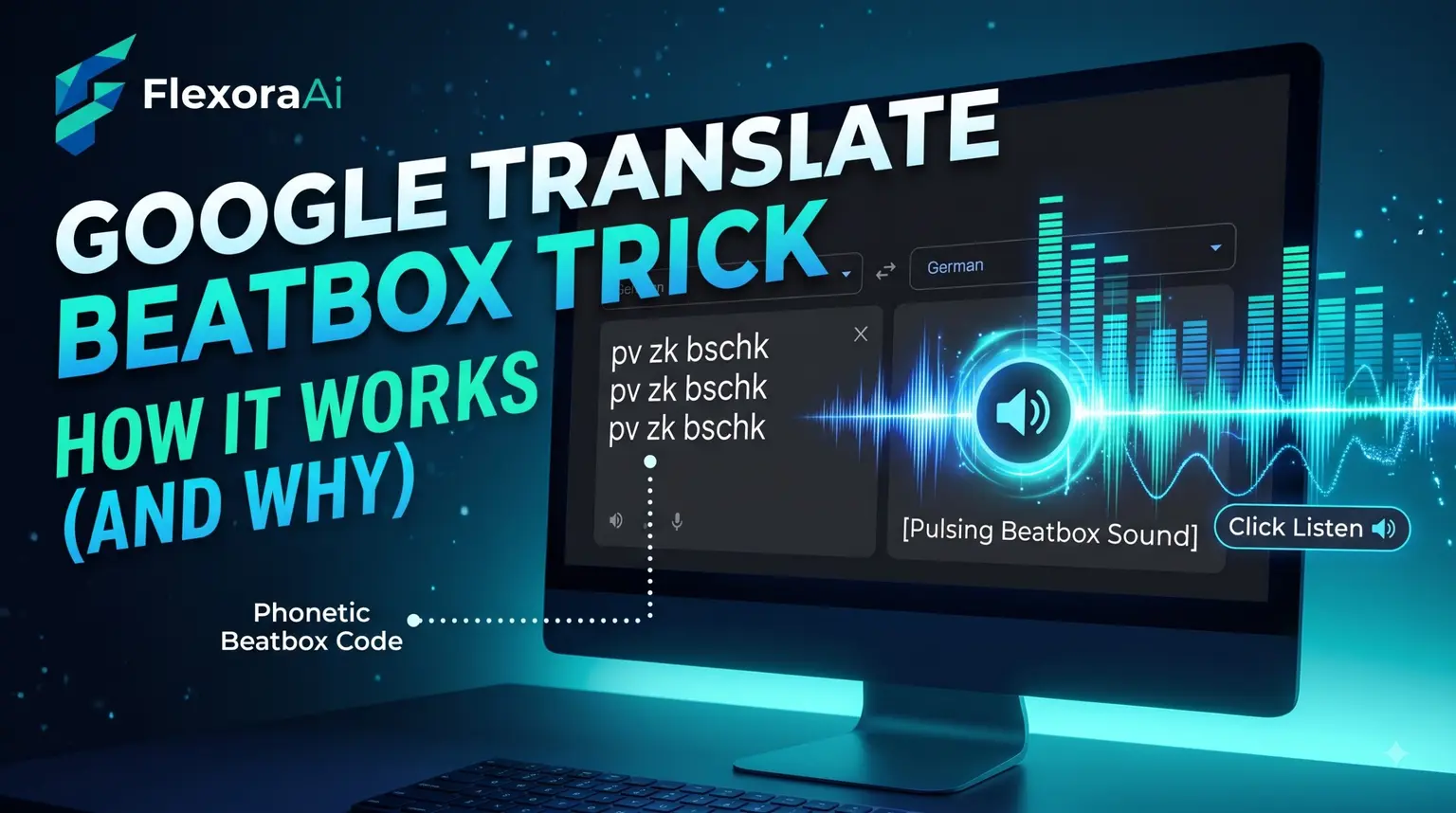
It sounds like a prank. Paste a string of nonsense consonants into Google Translate, press Listen, and out comes a beat. In 2010 a Reddit user found it, and the internet spent an afternoon making drum tracks with a translator. This guide, part of our Google products Easter eggs list, explains how it works, the notation people invented, and what to expect now.
Short answer: Set Google Translate to German on both sides, paste pv zk pv pv zk pv zk kz zk pv pv pv zk pv zk zk pzk pzk pvzkpkzvpvzk kkkkkk bsch and press Listen. The German voice pronounces the consonants like drum sounds. Results may differ from 2010.
Worth knowing
- Found by Reddit user harrichr in November 2010.
- Works because the German voice pronounces strings of consonants as sharp, percussive sounds.
- The notation guide came from a reader named iamdave, not from Google.
How to try it
- Open Google Translate in a desktop browser.
- Set both the source and target language to German.
- Paste the beat string into the box.
- Press the Listen button.
- Change a few letters and listen again.
Several early write-ups noted that Flash had to be installed for the Listen button to work. Modern Translate doesn't need it, which is one reason the sound may differ today.
Why it works
Speech engines turn text into sounds using rules for each language. German lets many consonants sit side by side without vowels, so the voice rattles through them quickly and crisply. In other languages the engine tends to pronounce each letter separately, which ruins the effect.
Nobody at Google designed it as an instrument. The first coverage even wondered whether it was an Easter egg or a clever manipulation. It was the second. That is part of its charm, and why it sits at the edge of our complete list of Google Easter eggs.
The beat notation
| Sound | Drum part |
|---|---|
| zk | Suspended cymbal |
| bschk | Snare |
| pv | Brush |
| bk | Bass |
| tk | Flam |
| krp | Hi-hat tap |
| th | Better hi-hat |
| thp or ds | Instant rimshot |
Spaces add pauses, so you can build a rhythm by spacing the sounds. One popular loop used the German phrase “Böse Katze,” which means bad cat, repeated over and over.
Make your own beat
- Start with a pattern. Four beats of bass and snare is plenty.
- Use spaces for rests. Silence is part of rhythm.
- Repeat it. Copy the pattern several times for a longer loop.
- Record it. Use your computer's recorder to capture a track.
- Add a voice. Beatbox over it for a duet with the translator.
Does it still sound right?
Perhaps not exactly. The voices Google uses have changed over the years, so the 2010 sequence may sound softer or different. Fan recreations and videos from that period are still around if you want to hear the original. If you try a modern translator such as DeepL, expect a different result, because each service uses its own voices.
For other ways to use Google tools in unexpected ways, see our Google search tips guide.
The phonetics behind the beat
Linguists group sounds like p, b, t and k as plosives. You make them by blocking the air for a moment and then releasing it, which creates a small burst of noise. That burst is exactly what a drum hit sounds like, which is why beatboxers use the same sounds with their mouths.
A speech engine that reads a string of consonants with no vowels between them produces a rapid series of those bursts. The result is rhythm without a melody. It also explains why the trick fell flat in languages whose rules insert a vowel sound between letters.
A classroom idea
Teachers can use the trick to introduce phonetics. Ask students to predict which letters will sound like drums, test the guesses, and discuss why. It's a quick way to show that speech software follows rules, and that the rules differ by language.
How we checked this: We used TechCrunch, Gizmodo, MusicRadar, The Mary Sue and DJ TechTools for the 2010 coverage, and Hacker News notation reported by those sites. We haven't verified how the trick sounds on today's voices. If something here is out of date for you, email ownerflexora.ai@gmail.com and we will fix it.
Your turn: Build a four-beat pattern, repeat it eight times and record it. Share the result with a friend and ask them to guess how it was made.
It's a good reminder that tools do more than their makers intended, and that a little curiosity can turn a translator into a drum machine.
More tricks to try
Want a chat-based trick instead? The Google Gemini easter eggs guide is next.