🔁 Student Loans · Refinance · AI Calculators
AI Student Loan Refinance Calculator
(Savings vs What You Give Up)
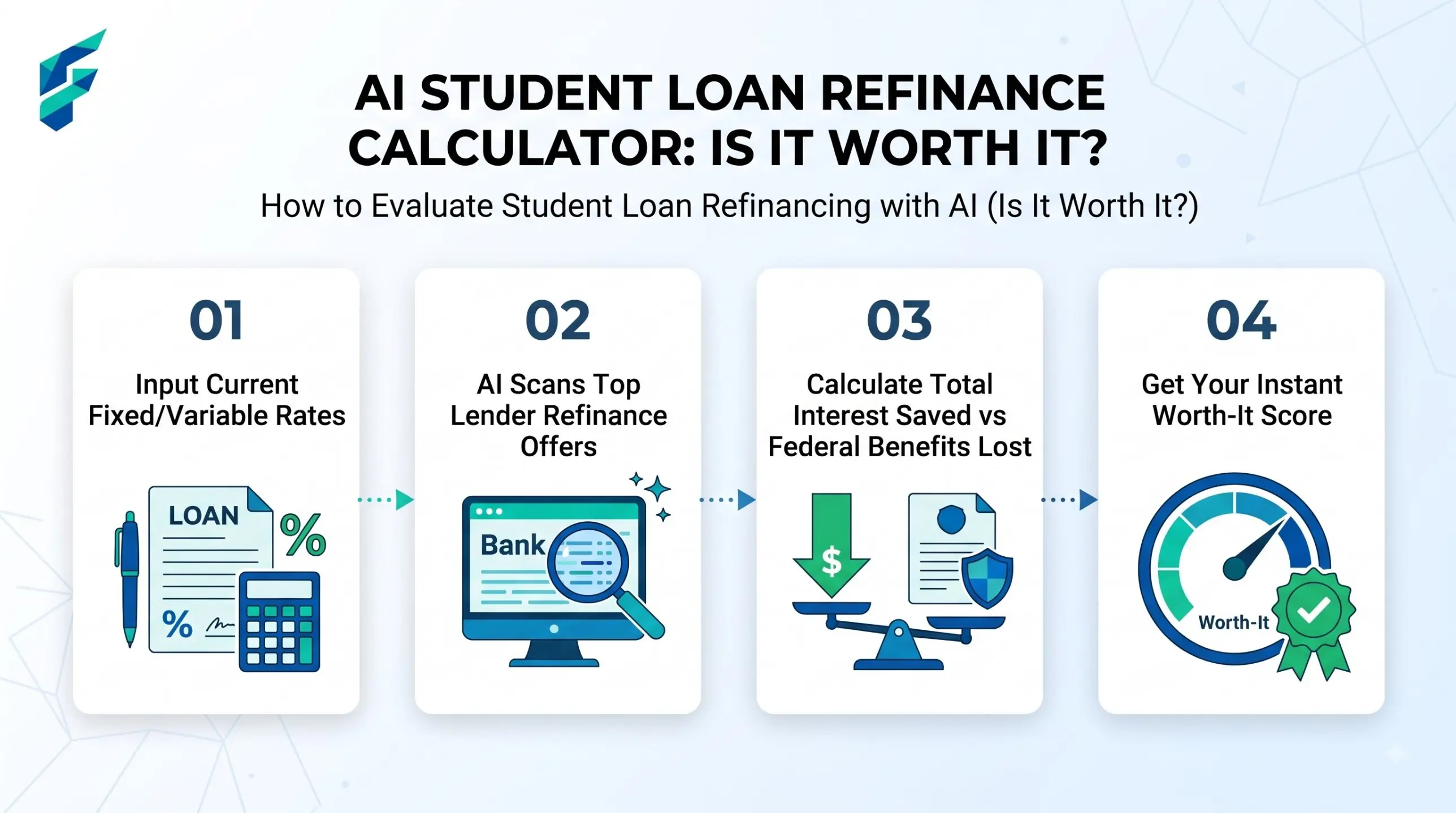
Refinancing is the one student loan move that can’t be undone. A private lender pays off your loans and gives you a new one, usually at a lower rate. The saving can be real. So is what you give up. An AI refinance calculator helps you see both sides in numbers before you apply.
Should you refinance student loans?
Refinance only if the new rate saves enough interest to matter, your income is stable, and you won’t need federal protections like income-based plans or forgiveness. Run the numbers on the interest saved, then price the safety net you’d lose. If you hold federal loans and are unsure, wait.
The upside, in numbers
Take $42,000 of federal loans at 7%, 10 years remaining. A made-up lender offers 5.5% over 10 years, or 5% over 5 years.
| Option | Monthly payment | Total interest | Interest saved vs now |
|---|---|---|---|
| Keep federal (7%, 10 yrs) | $487.66 | $16,519 | — |
| Refinance 5.5%, 10 yrs | $455.81 | $12,697 | $3,822 |
| Refinance 5.0%, 5 yrs | $792.59 | $5,556 | $10,963 |
The 10-year option cuts your payment by about $32 a month and saves $3,822 over the life of the loan. The 5-year option saves much more, but the payment jumps by about $305. The savings come from the shorter time as much as from the rate. You could get part of that effect without refinancing by paying extra on the federal loan. See the payoff guide.
The price of what you give up
Federal loans come with options that private loans mostly don’t: income-based payments, forgiveness programs, and flexible hardship terms. Refinancing federal loans into a private one ends your eligibility for Public Service Loan Forgiveness permanently. To see what that safety net is worth, compare the payment under an income-based plan. At an AGI of $55,000, RAP asks for about $229 a month, against $456 on the refinanced loan. If your income fell, that gap would be your cushion.
Compare keeping my federal loans with refinancing.
Federal: $42,000 at 7%, 10 years left. Offer A: 5.5% fixed, 10 years. Offer B: 5.0% fixed, 5 years.
For each: monthly payment, total interest, interest saved.
Then list what I lose by moving federal loans to a private lender.
Do not tell me what to do. Show the numbers and the trade-offs.
Questions to ask any lender
- Is the rate fixed or variable, and what could a variable rate reach?
- Is there an origination fee or a prepayment penalty?
- What happens if I lose my job? Is there any hardship pause, and how long?
- Does the rate depend on a cosigner, and when can the cosigner be released?
- Do you offer a soft credit check to preview the rate? Compare at least three.
When refinancing tends to make sense
People who gain most are those with private loans at high rates, a good credit score, stable pay and no plan to use federal programs. People who should think hardest are those with federal loans who might work in public service, expect unstable income, or may need forgiveness later.
Not for AI to decide: whether to give up federal protections. A chatbot can’t see your credit, your rate offers or your future income. Use it for arithmetic, then talk to a nonprofit counselor if the loans are large. Beware of ads promising “lower payments” for federal loans, which you can usually get free through StudentAid.gov.
Borrowing in India? If you hold an Indian education loan, a balance transfer to another bank can cut the rate. Add processing fees and any prepayment charge to the comparison before you move.
Common questions
Next
If you stay federal, compare plans in our plan comparison guide and free options on the CFPB student loan tools. For combining federal loans without a private lender, read the consolidation calculator guide. And see how interest works in the interest calculator guide.